

Furniture arrangement plays a crucial role in transforming a house into a home. It’s not just about aesthetics; the right layout enhances functionality and creates a welcoming atmosphere. Whether in a cozy living room or a spacious dining area, how furniture is placed can significantly impact the flow and comfort of a space.
Understanding the principles of furniture arrangement can help anyone optimize their living environment. From maximizing natural light to ensuring easy movement, thoughtful placement makes a world of difference. With a few strategic adjustments, even the smallest rooms can feel more open and inviting, while larger spaces can be made to feel intimate and cozy.
Importance Of Furniture Arrangement
Furniture arrangement significantly influences both the functionality and aesthetics of a space. An intentional layout can enhance comfort and create a welcoming environment.
Enhancing Functionality
Arranging furniture strategically allows spaces to serve their intended purposes effectively. Placement of seating areas encourages conversation, while proper positioning of tables supports dining and work activities. Flow between furniture pieces facilitates movement, making navigation easier in high-traffic areas. For example, ensuring at least 24 inches of walkway space between furniture enhances accessibility. Adaptive layouts also adapt to various needs, ensuring spaces remain functional for different activities, such as entertaining or relaxing.
Creating Aesthetic Appeal
Furniture arrangement plays a crucial role in the visual harmony of a room. Balanced layouts create a sense of cohesion while drawing attention to focal points, such as artwork or fireplaces. Utilizing symmetry enhances elegance, while asymmetrical arrangements produce dynamic interest. Layering textures and colors through furniture choices can further elevate the overall ambiance. For instance, mixing materials like wood, metal, and fabric creates depth and dimension, contributing to a more inviting setting.
Basic Principles Of Furniture Arrangement
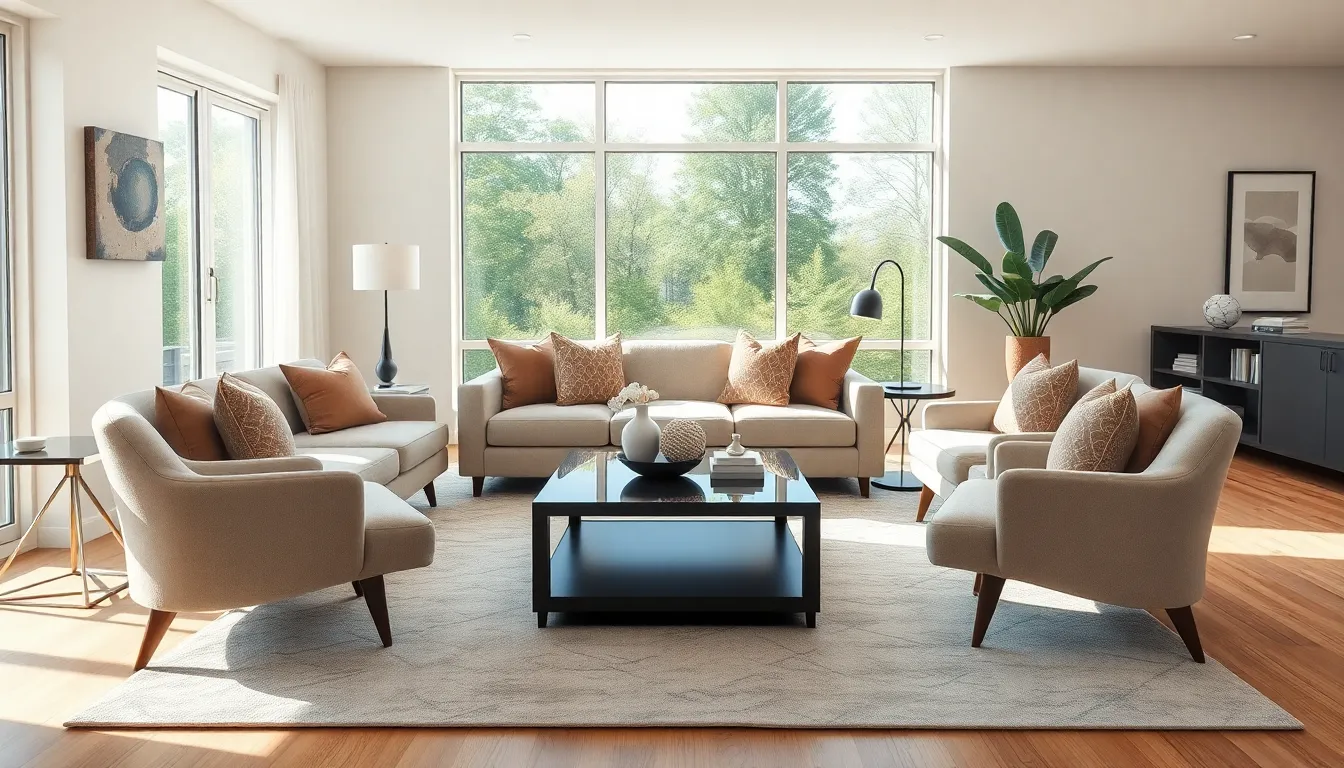
Effective furniture arrangement relies on several core principles to enhance a space’s functionality and aesthetic appeal.
Space Planning
Space planning involves assessing the dimensions and layout of a room to optimize furniture placement. Utilize a floor plan to mark the location of windows, doors, and electrical outlets. This clarity aids in determining furniture sizes and arrangements that promote movement. Furniture pieces should allow for at least 24 inches of walkway space in high-traffic areas. When planning, consider the room’s purpose, as designated zones for conversation, dining, or work activities elevate usability and comfort.
Balance And Symmetry
Balance and symmetry play vital roles in creating a visually pleasing environment. Symmetrical arrangements often evoke a sense of formality and elegance, ideal for traditional spaces. Position matching furniture pieces, like sofas or chairs, on opposite sides of a central point, such as a coffee table. Asymmetrical layouts create dynamic energy, suitable for casual settings. Use varied furniture sizes and shapes, but maintain visual weight equivalence. Both strategies can enhance a room’s overall harmony and contribute to its inviting atmosphere.
Tips For Effective Furniture Arrangement
Effective furniture arrangement enhances both functionality and aesthetics in any space. Implementing the following strategies optimizes room layouts for improved comfort and visual appeal.
Room-Specific Strategies
- Living Room: Position sofas and chairs to encourage conversation by creating a U-shape or circular arrangement. Ensure coffee tables are within 18 inches of seating for convenience. Integrate accent chairs and side tables to enhance flow while providing additional seating.
- Dining Room: Center the dining table in the room with at least 36 inches of space between the table and walls or other furniture for easy movement. Use a round table for smaller gatherings to maximize space. Incorporate sideboards or cabinets for storage, placing them against walls to free up pathways.
- Bedroom: Place the bed against the most prominent wall to serve as the room’s focal point. Maintain at least 24 inches of space around the bed for easy access. Use bedside tables for symmetry and functionality, ensuring lamps are placed at a comfortable height.
- Office: Position the desk facing the entrance to create a welcoming environment. Ensure 36-48 inches of space for easy movement. Utilize shelves and cabinets strategically to maintain a clutter-free workspace while maximizing efficiency.
Common Mistakes To Avoid
- Ignoring Scale: Choose furniture that fits the room size. Large furniture in small rooms creates cramped spaces, while small pieces in large areas can feel lost.
- Blocking Pathways: Arrange furniture to maintain clear pathways of at least 24 inches in high-traffic areas. Avoid placing furniture in direct line with doorways to ensure easy navigation.
- Lack of Focal Points: Every room needs a focal point. Position furniture around a central feature, such as a fireplace or artwork, to create interest.
- Overcrowding: Avoid overcrowding spaces with too much furniture. Leave open areas for walking and highlight features of the room for a more inviting atmosphere.
- Neglecting Lighting: Ensure proper lighting in each zone. Use a combination of ambient, task, and accent lighting for versatility and warmth in the environment.
Tools And Resources For Furniture Arrangement
Various tools and resources facilitate effective furniture arrangement, enhancing creativity and precision in layout design.
Design Software
Numerous design software options simplify furniture arrangement tasks. Programs like SketchUp, Roomstyler, and Sweet Home 3D allow users to visualize spaces in 3D, manipulate dimensions, and experiment with different layouts. These applications often offer drag-and-drop functionality for furniture placement, empowering users to create floor plans that suit their specific style and needs. Many of them include library resources with furniture models, helping to accurately represent furniture sizes and styles. Mobile apps like MagicPlan and Planner 5D provide convenience for on-the-go layout planning, ensuring flexibility while designing spaces.
Professional Services
Enlisting professional services can provide expert insight into furniture arrangement. Interior designers and space planners assess room dimensions, furniture options, and user needs to create optimized layouts. Professionals often bring knowledge of current trends, materials, and spatial dynamics to enhance aesthetics and functionality. Engaging a professional service enables tailored solutions that account for individual preferences, making it a worthy investment for those seeking a comprehensive approach to furniture arrangement.
Effective furniture arrangement plays a crucial role in transforming any space into a functional and inviting environment. By prioritizing layout design and considering elements like flow balance and symmetry, individuals can enhance both comfort and aesthetic appeal. Utilizing tools and resources for planning can simplify the process while offering creative insights.
Whether it’s a cozy living room or a productive office, strategic furniture placement can significantly improve the overall atmosphere. Embracing these principles not only elevates the look of a room but also fosters a sense of harmony and accessibility. With thoughtful arrangement, anyone can create a space that reflects their style and meets their needs.