

In today’s fast-paced world, creating an efficient workspace is more crucial than ever. A well-organized environment not only boosts productivity but also enhances creativity and reduces stress. Whether it’s a home office or a corporate setting, the layout and organization of a workspace can significantly impact performance and overall satisfaction.
With the right strategies, anyone can transform their workspace into a hub of efficiency. From decluttering to optimizing technology, small changes can lead to big improvements. Embracing these practices can help individuals and teams thrive, making every workday more productive and enjoyable.
Understanding Efficient Workspace
An efficient workspace fosters enhanced productivity and creativity. Understanding its definition and importance can guide improvements in both home and corporate environments.
Definition of Efficient Workspace
An efficient workspace refers to an environment—physical or digital—that is organized, functional, and conducive to productive work. It incorporates ergonomic design, effective technology integration, and the absence of unnecessary distractions. Examples of efficient workspace elements include clutter-free surfaces, appropriate lighting, and accessible resources.
Importance of an Efficient Workspace
An efficient workspace significantly impacts performance outcomes. Enhanced productivity stems from reduced time spent searching for items, while organized spaces promote focus and minimize stress. Research indicates that optimized work environments lead to a 20-25% increase in productivity among employees. Improved morale and creativity arise as individuals work in supportive and adaptable settings, driving overall job satisfaction and encouraging collaboration.
Key Elements of an Efficient Workspace
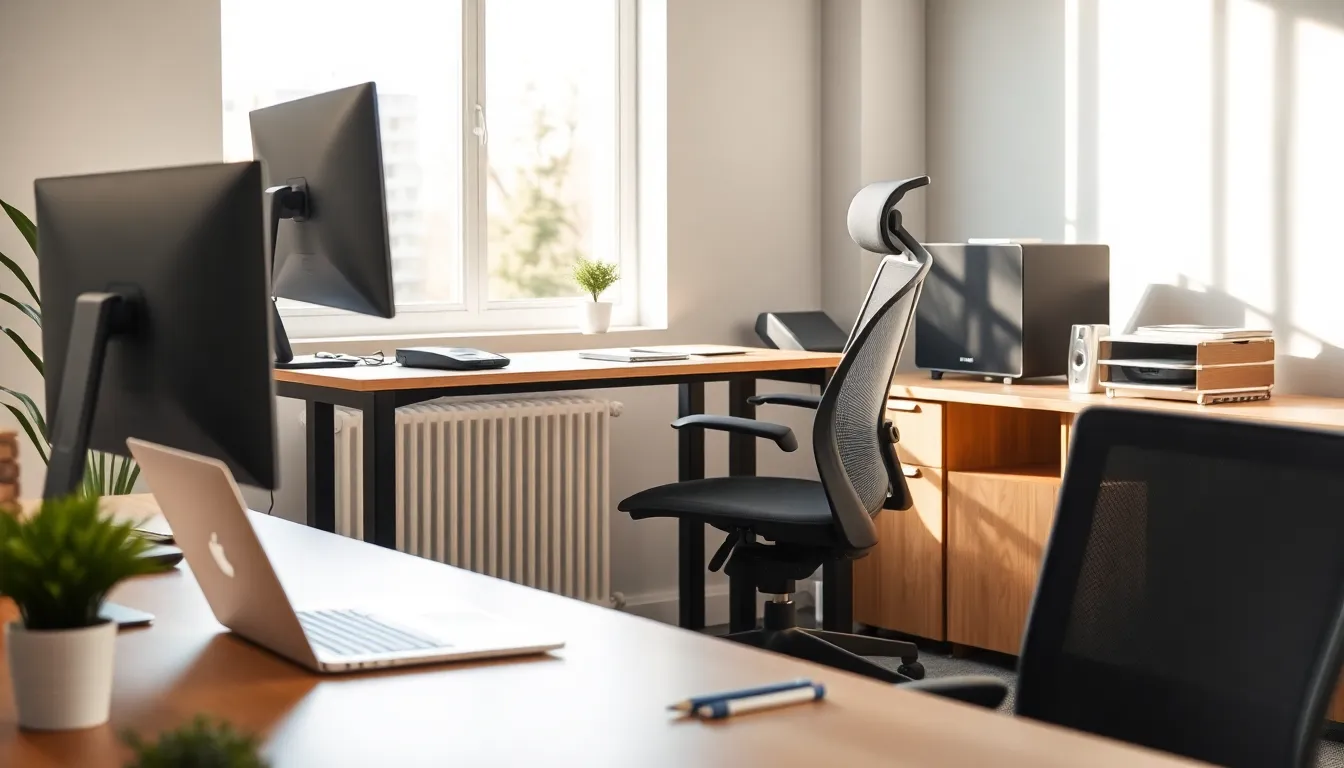
An efficient workspace combines ergonomic design with the right technology and tools. Focusing on these elements helps create a productive environment that supports individual needs and team collaboration.
Ergonomics in Workspace Design
Ergonomics plays a crucial role in workspace design. Proper ergonomics reduces physical strain and enhances comfort. Key ergonomic elements include:
- Chair Height: Chairs should adjust to fit various body types and allow feet to rest flat on the floor.
- Desk Height: Desks must align with the elbows to prevent strain during typing.
- Monitor Position: Monitors ought to be at eye level to reduce neck and eye strain.
- Keyboard and Mouse Placement: Keyboards and mice should be positioned close enough to maintain a neutral wrist position.
- Lighting: Adjustable lighting minimizes glare and creates a comfortable visual environment.
Implementing these ergonomic strategies enhances comfort and reduces the risk of injury, significantly improving productivity.
Technology and Tools for Efficiency
Technology and tools increase efficiency in workspaces. Choosing the right tools can streamline workflows and enhance communication. Essential technology includes:
- Collaboration Software: Tools like Slack or Microsoft Teams facilitate seamless communication and project management.
- Task Management Applications: Programs such as Trello or Asana organize tasks and deadlines, improving team accountability.
- Cloud Storage Solutions: Services like Google Drive or Dropbox promote easy access and sharing of documents.
- Time Management Tools: Timers or applications like Toggl help track time spent on projects, enabling better planning.
Integrating these technologies fosters collaboration, reduces barriers, and supports a more efficient working environment.
Strategies for Creating an Efficient Workspace
Creating an efficient workspace involves thoughtful planning and organization, both in physical and digital environments. Implementing the right strategies can maximize productivity and enhance the overall experience.
Organizing Your Physical Space
Prioritizing organization leads to a clutter-free environment. Utilize the following strategies to structure a productive workspace:
- Declutter surfaces: Remove unnecessary items from desks and shelves. Keep only essential tools and materials within reach.
- Use storage solutions: Invest in file cabinets, shelves, or bins to store documents and office supplies. Label contents for easy access.
- Create zones: Designate specific areas for various tasks, such as a reading nook, meeting space, or creative zone. This specialization fosters focus.
- Optimize furniture layout: Arrange furniture to reduce distractions and encourage efficient movement. Position desks near windows for natural light, avoiding glare on screens.
Setting Up a Digital Workspace
- Select appropriate software: Choose tools that fit project needs, such as collaboration platforms and cloud storage solutions. Ensure they integrate smoothly with existing systems.
- Organize files systematically: Create a clear folder structure for easy navigation. Use consistent naming conventions for documents to improve findability.
- Prioritize cybersecurity: Implement protections like strong passwords and two-factor authentication. Regularly back up data to prevent loss.
- Schedule digital breaks: Incorporate regular downtime from screens to reduce eye strain and maintain focus. Use techniques such as the Pomodoro technique to manage work intervals effectively.
Benefits of an Efficient Workspace
An efficient workspace contributes to higher productivity levels and improved collaboration among team members. By implementing smart strategies, individuals and teams can experience significant advantages in their work performance.
Increased Productivity
Increased productivity stems from a well-organized and functional workspace. Efficiency boosts by 20-25% when employees operate in environments that minimize distractions and streamline processes. Key elements include:
- Ergonomic Design: Proper chair and desk heights reduce physical strain, allowing employees to focus on tasks without discomfort.
- Technology Integration: Using the right tools like task management and collaboration software enhances workflow efficiency, enabling quick access to critical information.
- Clutter Reduction: A tidy environment eliminates visual distractions, enabling employees to concentrate on priorities effectively.
These factors directly correlate with enhanced output and overall job satisfaction.
Enhanced Collaboration
Enhanced collaboration results from an efficient workspace structure. Collaborative environments support teamwork and foster idea exchange. Important aspects include:
- Designated Zones: Creating specific areas for different tasks encourages both focus and teamwork, catering to individual and group work needs.
- Communication Tools: Implementing instant messaging and project management applications streamlines communication, allowing teams to share updates in real-time.
- Flexible Layouts: Open office designs promote spontaneous interactions, breaking down barriers and encouraging creative collaboration.
Collaboration not only improves project outcomes but also fosters a positive workplace culture.
Creating an efficient workspace is essential for maximizing productivity and fostering a positive work environment. By focusing on organization ergonomics and the right technology individuals and teams can transform their work experience. Implementing simple strategies like decluttering and optimizing layouts leads to significant improvements in performance and satisfaction.
As workplaces continue to evolve the importance of an efficient workspace remains paramount. Embracing these principles not only enhances individual output but also cultivates collaboration and creativity among team members. Ultimately an efficient workspace is a key investment in both personal and organizational success.