

Bathroom tiling is more than just a functional choice; it’s a chance to express personal style and elevate the overall aesthetic of a space. With countless designs, colors, and materials available, homeowners can transform a mundane bathroom into a stunning oasis. Whether opting for sleek modern tiles or classic ceramic, the right selection can significantly impact both the look and feel of the room.
Beyond aesthetics, bathroom tiling also plays a crucial role in durability and maintenance. Water resistance and ease of cleaning are essential factors to consider when selecting tiles, ensuring that the bathroom remains not only beautiful but also practical. Understanding the various options and installation techniques can help anyone create a space that’s both stylish and long-lasting.
Overview of Bathroom Tiling
Bathroom tiling serves as a critical element in both design and functionality. Tile selection offers homeowners extensive choices in terms of style, color, and texture, facilitating personal expression through this versatile medium.
Types of Tiles
- Ceramic tiles: Widely used for their affordability and resilience, ceramic tiles boast various colors and patterns.
- Porcelain tiles: Denser and less porous than ceramic, porcelain tiles excel in moisture resistance, making them ideal for bathrooms.
- Natural stone tiles: Options like marble, granite, and slate enhance luxury and aesthetic appeal but require additional maintenance.
- Glass tiles: Known for reflections and modernity, glass tiles add light to bathrooms but can be more fragile.
Benefits of Tiling
- Durability: Tiles withstand heavy foot traffic, humidity, and temperature fluctuations, ensuring longevity.
- Water Resistance: Tiles repel moisture, reducing risks of mold and mildew, critical for bathroom environments.
- Easy Maintenance: Most tiles can be quickly cleaned with common household products, promoting hygiene with minimal effort.
Installation Techniques
- Thin-set method: Utilizing mortar to bond tiles to the substrate, this method offers stability and flexibility.
- Backer board installation: A moisture-resistant underlayment prevents water damage, enhancing overall durability.
- Grouting: Filling the spaces between tiles, grouting protects against water infiltration and enhances aesthetic appeal.
Choosing the right tiles, understanding their advantages, and employing proper installation techniques ensures a successful bathroom design that is both appealing and functional.
Types of Bathroom Tiles
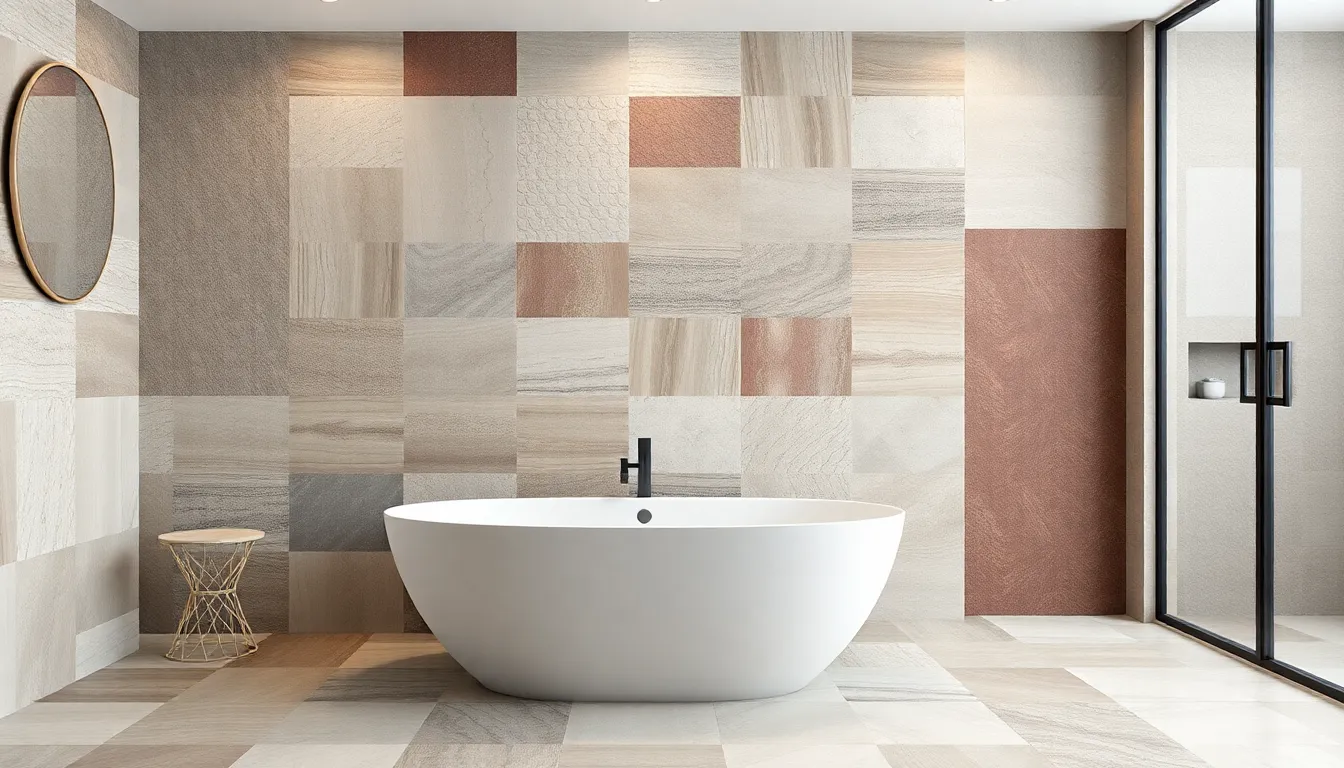
Bathroom tiles come in various materials, each offering distinct benefits and aesthetics. Understanding the different types helps in making informed choices for a stylish and functional bathroom.
Ceramic Tiles
Ceramic tiles are popular for bathroom applications due to their affordability and versatility. They are made from clay and fired at high temperatures, creating a durable surface. Ceramic tiles come in a range of colors, patterns, and finishes, allowing for extensive design possibilities. Their water-resistant properties make them suitable for wet environments, and they are easy to clean, which maintains hygiene.
Porcelain Tiles
Porcelain tiles offer a denser and more durable option compared to standard ceramic tiles. Made from finer clay and fired at higher temperatures, porcelain tiles are less porous, providing superior moisture resistance. They are ideal for high-traffic areas and can emulate the look of natural stone or wood. Porcelain tiles come in various sizes and designs, ensuring flexibility in aesthetic choices.
Natural Stone Tiles
Natural stone tiles, such as granite, marble, and slate, add a luxurious touch to bathrooms. Each type of stone provides unique patterns and colors, bringing nature’s beauty indoors. Stone tiles are durable and long-lasting; however, they require sealing to enhance moisture resistance and prevent staining. Natural stone tiles offer excellent thermal properties, keeping the bathroom warm; their unique aesthetics elevate any bathroom design.
Benefits of Bathroom Tiling
Bathroom tiling offers numerous advantages, enhancing both aesthetics and functionality in home environments. This section details key benefits.
Aesthetic Appeal
Tiles provide an extensive range of designs, colors, and textures, allowing for creative expression in bathroom design. Patterns can be customized to create various styles, from modern minimalism to classic elegance. The reflective quality of certain tiles, such as glass or polished porcelain, can also enhance light, making the space feel larger and brighter. The ability to mix and match different tile types offers homeowners a unique opportunity to personalize their bathrooms.
Durability and Longevity
Tiles are known for their strength and resistance to wear. Porcelain and ceramic tiles, in particular, possess a low porosity that enhances their durability. They resist scratching, cracking, and staining, making them ideal for the high moisture environment of a bathroom. With proper installation, tiled surfaces can last for decades, providing substantial value over time. Natural stone tiles, while needing periodic sealing, offer similar long-term benefits when maintained appropriately.
Easy Maintenance
Tiled surfaces simplify cleaning routines. Non-porous tiles resist water and grime absorption, reducing the frequency and difficulty of cleaning. Most tiles only require regular sweeping and occasional mopping to maintain their appearance. Additionally, grouted areas can be easily cleaned with specialized products, preventing mold growth and ensuring hygiene. This low-maintenance aspect makes tiling particularly appealing for busy households.
Tips for Choosing Bathroom Tiles
Choosing the right tiles significantly impacts a bathroom’s overall look and functionality. Various factors, including color, design, size, and format, play a crucial role in the selection process.
Color and Design Considerations
Color influences the mood and perception of space in a bathroom. Light colors, like whites and pastels, create an illusion of space and brightness. Dark hues, such as navy or charcoal, add drama and depth. Neutral tones maintain a classic and timeless aesthetic.
Design options range from bold patterns to subtle textures. Geometric tiles can inject modern flair, while mosaic tiles offer intricate detailing. Consider combining different tile shapes and colors for a unique visual effect. Practicality matters; glossy tiles reflect light, while matte surfaces can hide water spots and fingerprints.
Size and Format Options
Tile size affects both appearance and functionality. Large tiles, typically 12×24 inches or greater, minimize grout lines, creating a seamless look. Smaller tiles, like mosaics, provide better slip resistance, particularly in wet areas.
Format refers to the tile’s shape and layout. Rectangular tiles can be installed in various patterns, such as herringbone or stack bond, offering versatility. Square tiles, varying from standard sizes to large formats, create a more traditional feel.
Choosing the right size and format ensures a cohesive design that enhances the bathroom’s aesthetics while addressing practical considerations.
Bathroom tiling stands as a pivotal element in creating a stunning and functional space. With a wide range of materials and designs available, homeowners can easily express their personal style while ensuring practicality. The durability and water resistance of tiles make them an ideal choice for wet environments, while their easy maintenance keeps bathrooms looking fresh and inviting.
Choosing the right tiles can significantly enhance both the aesthetic and functionality of the bathroom. By considering factors like color, size, and layout, individuals can achieve a harmonious design that reflects their vision. Ultimately, investing in quality bathroom tiling not only elevates the space but also adds value to the home for years to come.