

Waking up to the sound of a blaring alarm can be a real nightmare, especially when it feels like your iPhone’s alarms are multiplying faster than rabbits. If you’ve ever found yourself in a chaotic symphony of buzzing and beeping, you know it’s time for a little digital decluttering. Clearing all alarms on an iPhone might seem like a daunting task, but it doesn’t have to be.
Understanding Alarms on iPhone
iPhone alarms serve various purposes and can significantly impact daily routines. Users should understand the different types of alarms and the importance of managing them effectively.
Types of Alarms
Alarms on iPhones come in multiple forms. Standard alarms are the most common, set to ring at a specified time. Repeat alarms allow for scheduling daily, weekly, or custom intervals. Timer alarms, typically used for workouts or cooking, notify users when a designated time elapses. Lastly, wake-up alarms, including gradual volume settings, help ease users into their day. Each type serves unique functions, making it crucial to select the right one based on personal needs.
Importance of Managing Alarms
Managing alarms on an iPhone enhances productivity. A clutter of alarms can lead to confusion and missed notifications. By organizing and clearing unnecessary alarms, users can maintain focus and reduce stress. Efficient alarm management helps streamline daily tasks and ensures only relevant reminders remain active. Regular reviews also prevent alarm fatigue, allowing for a more peaceful sleep and waking experience. Prioritizing alarm clarity enhances overall well-being and daily effectiveness.
Steps to Clear All Alarms on iPhone
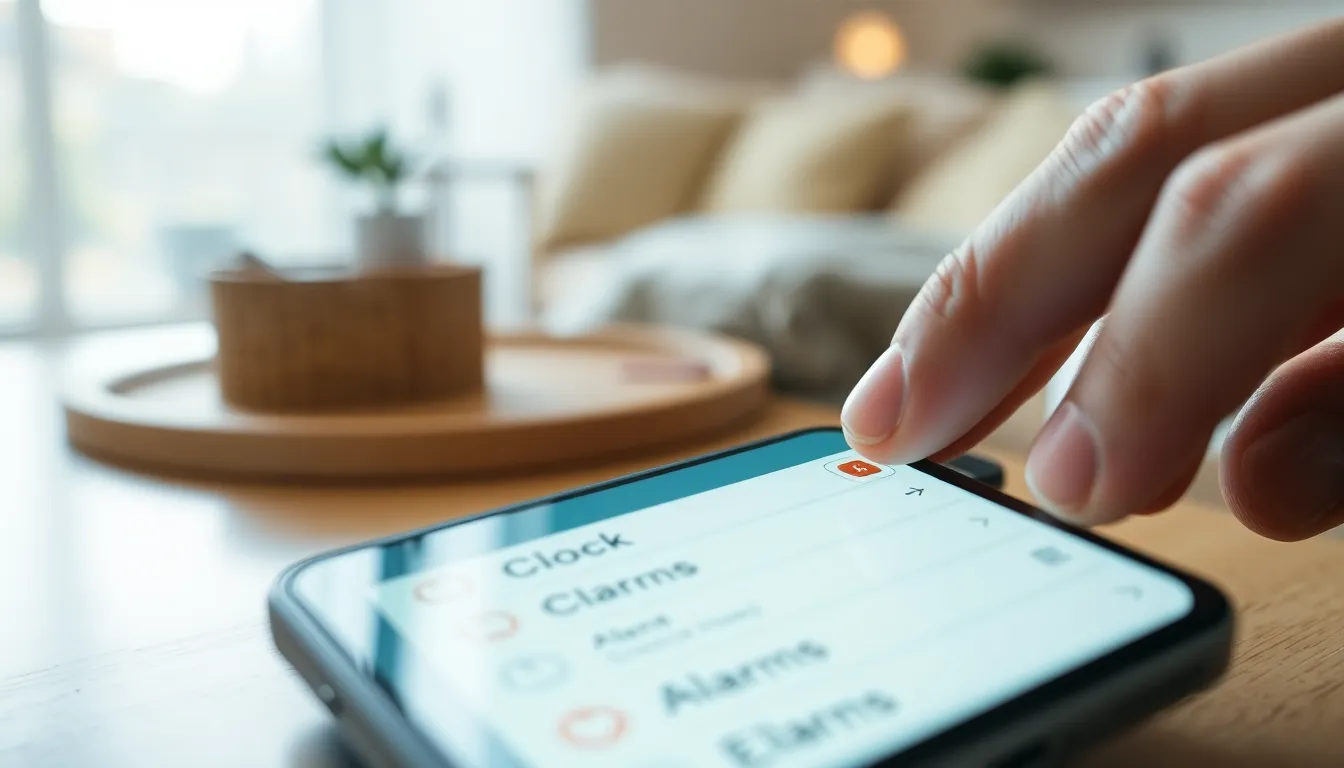
Clearing all alarms on an iPhone is straightforward. Users can manage this through the Clock app or use Siri for a quick solution.
Using the Clock App
Open the Clock app to access alarms. Tap on the “Alarm” tab at the bottom of the screen. Users see a list of all set alarms. To delete an alarm, tap the “Edit” button located in the upper-left corner. A red minus sign appears next to each alarm. Press this sign, then confirm the deletion by tapping “Delete.” Repeat this process for each alarm. Clearing all alarms simplifies the user’s notification system and avoids confusion.
Using Siri for Alarm Management
Using Siri is an efficient way to manage alarms. Simply activate Siri by saying, “Hey Siri.” Next, instruct Siri by saying, “Clear all alarms.” Siri processes the command and deletes all active alarms without needing to navigate through the Clock app. This method provides a hands-free experience, allowing users to swiftly regain control over their iPhone’s alarm settings.
Troubleshooting Alarm Issues
Alarm issues can disrupt daily routines and cause unnecessary stress. Addressing these problems effectively contributes to a smoother experience with the iPhone’s alarm features.
Common Problems with Alarms
Users often encounter a few common problems with alarms. One frequent issue involves alarms not sounding at the set time. This could stem from the device being in silent mode or the volume being too low. Another common problem includes alarms failing to repeat as scheduled. Settings may need adjustment to ensure alarms repeat as intended. Additionally, some users may experience alarms that unexpectedly turn off. This often requires checking for any conflicting settings or software glitches.
Tips for Effective Alarm Management
Managing alarms efficiently enhances daily life. Start by reviewing alarms regularly to identify any that are unnecessary. Organizing alarms into specific categories, such as work-related or personal, can improve clarity. Setting clear labels for each alarm also aids in distinguishing their purposes. Utilize the snooze function wisely; overusing it may lead to confusion. Syncing alarms with calendars or reminders can further streamline notifications. Keeping the device updated ensures alarms operate smoothly and resolve any potential software issues.
Clearing all alarms on an iPhone doesn’t have to be a daunting task. With simple steps through the Clock app or by using Siri, users can regain control over their notifications. This process not only reduces clutter but also enhances daily productivity and promotes a more peaceful waking experience.
By regularly reviewing and organizing alarms, individuals can prevent confusion and maintain focus throughout their day. Embracing these effective alarm management strategies will lead to improved well-being and a more streamlined approach to daily routines. A clutter-free alarm system is just a few taps away, making it easier to stay on track and enjoy a restful night’s sleep.