Pushing an office chair across carpet shouldn’t feel like cross-country skiing. Yet plenty of home office workers wrestle with chairs that dig into pile, roll like they’re stuck in mud, or leave permanent indentations in berber. The problem isn’t always the chair itself, it’s the mismatch between standard casters and soft flooring. Most office chairs ship with hard plastic wheels designed for smooth surfaces like hardwood or tile, and those simply don’t cut it on anything with cushion. Whether you’re setting up a home office over wall-to-wall plush or a low-pile commercial grade, understanding what makes a chair carpet-compatible will save your back, your floor, and your patience.
Table of Contents
ToggleKey Takeaways
- Standard hard plastic casters fail on carpet because they sink into the pile and increase rolling resistance, making it difficult to move your office chair smoothly.
- An office chair for carpet performs best with soft polyurethane wheels (2.5–3 inches in diameter) and a wider base (27–28 inches) that distributes weight more effectively across soft flooring.
- Upgrading casters on any office chair costs only $20–$50 and takes minutes by pulling out old wheels and pressing in carpet-compatible replacements with no tools required.
- A polycarbonate chair mat (36×48 inches standard) with gripper teeth provides effective carpet protection and smooth rolling, especially for thick or plush pile over 0.5 inches.
- When shopping for a new office chair for carpet, prioritize models with replaceable caster stems, a 300+ pound weight rating, and Class 4 gas lifts to ensure long-term durability and smooth mobility.
Why Standard Office Chairs Struggle on Carpet
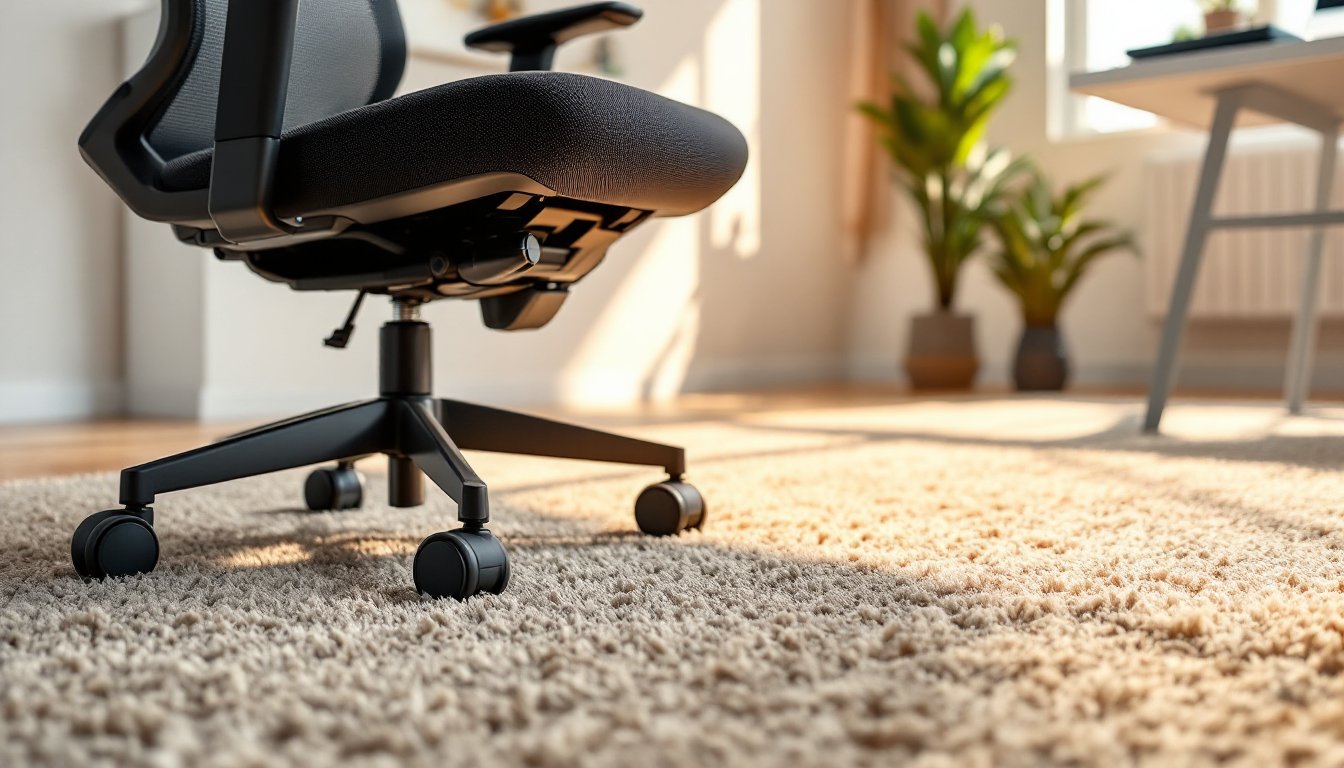
Standard office chairs come equipped with hard plastic casters, typically 2 to 2.5 inches in diameter, that work beautifully on hard floors but fail on carpet for a simple reason: surface area and resistance. Carpet fibers create friction and the wheels sink into the pile, increasing rolling resistance exponentially.
When a narrow, hard wheel encounters carpet, it acts like a wedge trying to push through soft material rather than rolling over it. The chair user ends up straining to move, which leads to poor posture, repetitive stress, and frustration. Over time, this also compresses carpet fibers under the caster path, leaving visible tracks and permanent indentations.
Pile height makes the problem worse. Low-pile commercial carpet (under 0.25 inches) offers some give but still resists hard casters. Medium-pile (0.25 to 0.5 inches) and plush or shag varieties (over 0.5 inches) turn standard office chairs into stationary furniture. The wheels simply can’t gain enough traction or clearance to roll freely.
Carpet padding underneath compounds the issue. While padding adds comfort underfoot, it creates an unstable base that allows casters to sink even deeper. A chair rated for 250 pounds concentrates that weight onto four or five small contact points, and soft padding offers little resistance.
Key Features to Look for in a Carpet-Friendly Office Chair
Not all office chairs handle carpet equally. The right combination of features makes the difference between smooth mobility and a workout every time you need to scoot closer to the desk.
First, check the base diameter. A wider five-star base (27 to 28 inches across) distributes weight better than a narrow one, reducing how much each caster sinks into carpet. Chairs marketed for heavy-duty use often come with larger bases as standard.
Next, consider weight capacity and build. Chairs rated for 300+ pounds typically use sturdier frames and reinforced casters that resist sinking. Even if the user weighs less, the robust construction helps on soft flooring.
Gas cylinder quality matters more than you’d think. A Class 4 gas lift (the highest rating) maintains seat height stability better on uneven surfaces like thick carpet, where cheaper cylinders might compress unevenly or fail prematurely.
Look for chairs with replaceable caster stems. Standard stems use a grip-ring or threaded post system, making wheel swaps straightforward. This flexibility lets you upgrade to carpet-specific casters without replacing the entire chair.
Wheel Type and Size Matter Most
Casters are the make-or-break component. Soft rubber or polyurethane wheels (often called rollerblade-style casters) are designed specifically for carpet. They’re typically 2.5 to 3 inches in diameter, larger than standard hard plastic, and made from a softer durometer material (around 70A to 85A hardness).
The larger diameter rolls over carpet pile instead of digging in, while the softer material grips fibers for controlled movement without damaging them. These casters also work on hard floors, making them truly universal.
Bell glides are an alternative for users who want zero movement. These aren’t wheels at all, they’re wide, flat discs that replace casters entirely, turning a rolling chair into a stationary one. They distribute weight over a much larger surface area, preventing indentations. Bell glides work well for standing desk converters or situations where the chair rarely moves.
Avoid dual-wheel casters marketed as “universal.” These have two small hard wheels per stem and still struggle on anything thicker than berber. They’re a marginal improvement over single hard wheels but not a real solution.
Top Office Chair Options for Carpeted Home Offices
Several chair types and models handle carpet better than others, either through design or easy modification.
Ergonomic mesh chairs with wide bases and replaceable casters are solid starting points. Models in the $200–$400 range often include standard casters but accept aftermarket carpet wheels without any tools beyond pulling the old ones out and pressing new ones in. Look for chairs with a 28-inch base and a 300-pound rating minimum.
Big-and-tall office chairs are surprisingly good on carpet even if you’re not big or tall. They’re engineered with oversized components, including casters, and the extra-wide bases distribute weight effectively. Many come with soft-tread wheels as standard equipment.
Drafting chairs and stools with adjustable height rings work well in home offices with higher desks or standing desk setups. Their taller gas cylinders and extended bases help on carpet, though you’ll still want to swap in carpet-friendly casters.
Avoid racing-style gaming chairs unless they specifically advertise carpet compatibility. Even though their aggressive look and often high price tags, many use the same cheap hard plastic casters as budget office chairs. The bucket-seat design also makes wheel swaps more complicated on some models.
If you’re building a workshop or home office setup from scratch, consider the flooring first. Retrofitting furniture for carpet is doable, but starting with compatible components saves money and hassle.
How to Improve Any Office Chair’s Performance on Carpet
You don’t need to replace an otherwise good chair just because it came with the wrong wheels. Upgrading casters is straightforward and costs $20–$50 for a set of five.
Replacing casters:
- Flip the chair over or tilt it to access the caster stems.
- Pull each caster straight out of the base socket, most use a friction-fit grip ring. If one’s stubborn, use a flathead screwdriver to pry gently while pulling.
- Measure the stem diameter (usually 7/16 inch or 11mm) and length. Most are 7/8 inch to 1 inch long.
- Buy replacement soft polyurethane casters sized for carpet. Verify stem compatibility before ordering.
- Press each new caster firmly into the socket until it clicks or seats fully. No tools required for grip-ring types: threaded stems need a wrench.
Test the chair after installation. It should roll smoothly without excess resistance. If it’s still sticky, check that all five casters are fully seated and the same size.
Bell glide installation follows the same removal process but replaces wheels with wide, flat discs. This works best for chairs that rarely move or in rooms where you want zero risk of rolling (like a reading nook or craft space).
For chairs with non-removable or proprietary casters, consider a chair mat instead (covered in the next section). Some high-end ergonomic chairs use integrated wheel assemblies that can’t be swapped without voiding the warranty.
Weight distribution tip: If your chair still sinks after a caster swap, the issue might be carpet padding that’s too soft. Commercial-grade padding (6-pound density or higher) offers better support than residential padding (3- to 4-pound density). This isn’t something most DIYers will replace just for a chair, but it’s worth knowing if you’re planning a broader home office renovation.
Protecting Your Carpet from Office Chair Damage
Even with the right casters, carpet under an office chair takes a beating. Preventive measures extend carpet life and maintain appearance.
Chair mats are the most common solution. Choose between two types:
- Polycarbonate mats (0.125 to 0.25 inches thick) are durable, clear, and resist cracking in cold rooms. They work on low- to medium-pile carpet and typically include gripper teeth on the underside to prevent sliding. Expect to pay $50–$150 depending on size.
- PVC mats are cheaper ($30–$80) but can become brittle over time, especially in heated rooms or direct sunlight. They’re fine for light use or temporary setups.
Size the mat so the chair base and your feet both rest on it when seated. A 36×48-inch mat is standard for most setups: L-shaped desks might need a 48×60-inch mat or larger.
For thick or plush carpet (over 0.5-inch pile), look for mats specifically rated for high-pile. These are thicker (0.25 inches or more) and have longer gripper teeth. Standard mats will flex and eventually crack on thick padding.
Installation tips:
- Let the mat acclimate to room temperature for 24 hours before use, especially in cold weather. This prevents cracking when you first roll over it.
- Place the mat gripper-side down and press firmly, starting from the center and working outward to eliminate bubbles.
- For mats on very plush carpet, consider adding a thin plywood underlayment (0.25-inch) between the carpet and mat for a more stable base. This is overkill for most situations but works in extreme cases.
Alternative protection methods:
Some home office builders create a raised platform or furniture base that sits on top of carpet, with hard flooring material on the platform surface. This approach works well if you’re doing a full office buildout and want a level, stable work zone. It’s more involved than a chair mat but eliminates the carpet issue entirely.
For light-duty setups or guest rooms that double as occasional offices, a heavy-duty area rug over carpet with a non-slip pad can work. Place the chair on the rug instead of directly on carpet. This won’t provide the same smooth rolling as a hard mat, but it spreads weight better than bare carpet.
Conclusion
Getting an office chair to work well on carpet comes down to matching wheels to surface and protecting the flooring from concentrated weight. Swapping to soft polyurethane casters handles most situations for under $50, while a quality chair mat adds a layer of defense for high-traffic home offices. If you’re shopping for a new chair, prioritize comfortable seating with ergonomic support and a wide base that accepts standard replacement casters, that flexibility pays off long-term.