An accent chair in an office isn’t just a place for guests to sit, it’s a functional design element that can change the entire feel of a workspace. Whether someone’s setting up a home office from scratch or refreshing an existing setup, adding the right accent chair brings both utility and personality. Unlike a standard desk chair, an accent piece offers flexibility: a spot for reading blueprints, taking calls away from the desk, or even switching positions during long project planning sessions. And with 2026’s emphasis on hybrid work environments and multi-functional spaces, choosing an accent chair that balances comfort, durability, and aesthetics has never been more practical.
Table of Contents
ToggleKey Takeaways
- An accent chair for your office provides both functional utility and aesthetic value, serving as a secondary work zone while introducing color and style that breaks up standard furniture monotony.
- Proper measurements and positioning—including 30 inches of clearance, seat heights between 16–20 inches, and strategic placement near windows or opposite your desk—maximize comfort and usability.
- Mid-century modern, Scandinavian, and contemporary styles offer durability when built with solid hardwood frames and quality upholstery; prioritize tight-weave fabrics like twill or canvas for easier maintenance.
- Support posture variation by rotating between your desk chair and accent chair during long workdays, reducing fatigue and stiffness from prolonged sitting.
- Simple DIY customizations—such as reupholstering seat cushions, painting wooden legs, or adding lumbar support with hook-and-loop pillows—give secondhand or builder-grade accent chairs a personalized, professional finish.
Why an Accent Chair Is the Perfect Addition to Your Home Office
Most home offices get outfitted with the basics: a desk, a task chair, maybe a filing cabinet. But an accent chair fills gaps that standard office furniture can’t. It creates a secondary work zone, ideal for reviewing documents, sketching design ideas, or taking video calls without the formality of sitting at a desk.
From a practical standpoint, accent chairs support better posture variation. Sitting in one position all day, even in an ergonomic task chair, leads to stiffness. Having an alternate seating option encourages movement and position changes, which can reduce fatigue during long workdays.
Accent chairs also serve a spatial function. In home offices that double as guest rooms, reading nooks, or creative studios, an accent chair defines zones without requiring walls or partitions. Place one near a window with a side table, and it becomes a reading corner. Pair it with a small ottoman, and it’s a spot for lacing up boots before heading out to the workshop.
Finally, there’s the aesthetic benefit. A well-chosen accent chair introduces color, texture, or a contrasting design style that breaks up the monotony of standard office furniture. Homes featured on platforms like Houzz often showcase offices where a single statement chair elevates the entire room’s visual appeal without major renovations.
Top Styles of Accent Chairs for Office Spaces
Mid-Century Modern and Scandinavian Designs
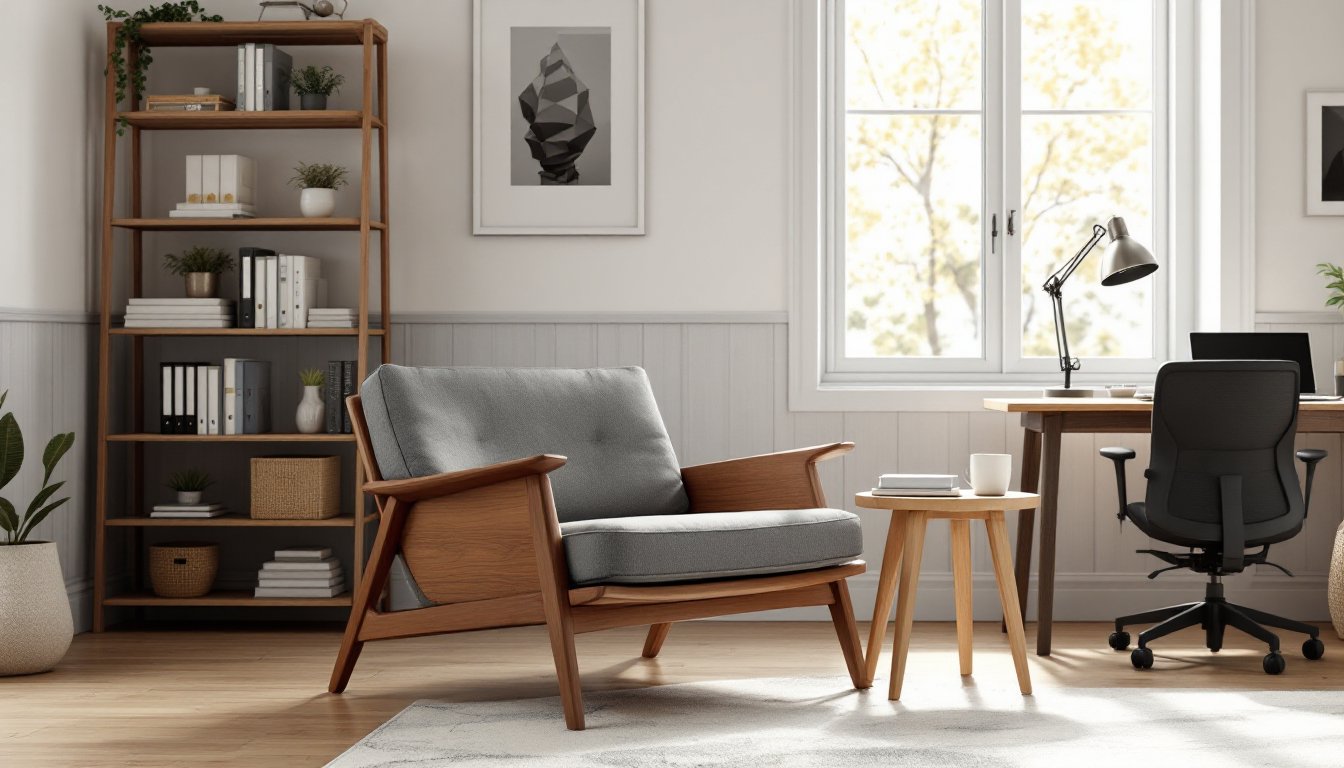
Mid-century modern chairs, think tapered wooden legs, low-profile arms, and clean lines, remain popular in 2026 for good reason. They’re compact enough for smaller offices, and their neutral profiles work with a range of decor styles. Look for chairs with solid hardwood frames (walnut, oak, or ash) rather than particleboard: they’ll hold up better under daily use.
Scandinavian designs take a similar approach but often incorporate lighter woods like birch or beech, along with natural textiles, linen, wool, or cotton blends. These chairs prioritize comfort without bulk. Many feature slightly angled backs and curved armrests that support relaxed sitting postures, making them suitable for longer sessions away from the desk.
Both styles tend to avoid heavy padding, which means they won’t sag or flatten as quickly as overstuffed lounge chairs. For someone who wants a chair that’ll last a decade or more, stick with exposed hardwood joinery and replaceable cushion covers.
Contemporary and Minimalist Options
Contemporary accent chairs often incorporate mixed materials, metal frames with upholstered seats, molded plywood with leather accents, or powder-coated steel with fabric slings. These designs work well in offices with industrial or modern aesthetics: exposed ductwork, concrete floors, steel desks.
Minimalist chairs strip things down even further. Expect simple geometric shapes, monochromatic color schemes, and functionality over ornamentation. A minimalist accent chair might be a bentwood shell on slim metal legs or a single-piece molded plastic seat. They’re easy to clean (important in a dusty workshop-adjacent office) and lightweight enough to move around as needed.
One trade-off: minimalist chairs often sacrifice cushioning for form. If the plan is to sit for extended periods, test the chair first or add a thin seat cushion. Otherwise, they’re excellent for short breaks, quick meetings, or as visual anchors in a room layout.
For design inspiration and examples of how these styles integrate into real spaces, browsing galleries on Design Milk can offer practical ideas beyond generic catalog photos.
How to Choose the Right Accent Chair for Your Office Setup
Start with measurements. Measure the available floor space, accounting for clearance, at least 30 inches from the chair’s front edge to any wall or furniture piece to allow comfortable entry and exit. Standard accent chair widths range from 24 to 32 inches: armless or slipper-style chairs save space in tight corners.
Next, consider seat height. Most accent chairs sit between 16 and 18 inches off the floor, which works for average-height users. If the chair will pair with a low side table or ottoman, aim for the lower end of that range. For taller users or those who prefer higher seating, look for chairs with seat heights around 19 to 20 inches.
Weight capacity matters, especially for chairs with slim profiles. Check the manufacturer’s rating, quality chairs should support at least 250 pounds. Chairs with exposed wooden legs or metal frames often publish load specs: upholstered pieces sometimes don’t, which is a red flag.
Upholstery choice depends on use and maintenance tolerance. Leather or faux leather wipes clean easily, making it practical for offices that see sawdust, pet hair, or frequent spills. Tight-weave fabrics like twill or canvas resist pilling and hold up better than loose weaves. Avoid delicate materials like velvet or silk blends unless the chair is purely decorative.
For those prioritizing support during longer sitting sessions, similar principles apply when choosing comfortable office chairs for primary desk use, look for lumbar contours and cushion density.
Finally, test armrest height if the chair will slide under a desk or table. Armrests should clear the desk’s underside by at least 1 inch. If clearance is tight, choose an armless design or one with low, inset arms.
Best Placement Ideas for Office Accent Chairs
Placement determines how much use an accent chair actually gets. A chair shoved into a corner collects laundry: one positioned thoughtfully becomes part of the workflow.
Near a window is a classic choice. Pair the chair with a small side table and a task lamp for a reading or sketching zone. If the window gets strong afternoon sun, add a simple roller shade to prevent fabric fading, UV exposure degrades upholstery faster than most people expect.
Opposite the desk creates a conversational setup, useful for client meetings or collaborative planning sessions. This works best in offices with at least 120 square feet of floor space: smaller rooms feel cramped with furniture facing multiple directions.
In an alcove or under a sloped ceiling turns awkward architectural features into usable space. Measure headroom carefully, at least 36 inches of clearance above the seated position is comfortable. Lower ceilings work if the chair has a low back profile.
Flanking a bookshelf or credenza can frame a focal wall and provide quick access to reference materials. Keep the chair at least 12 inches away from the furniture piece to avoid a cluttered look and allow easy movement.
For offices that double as multi-use rooms, positioning the chair to define a boundary between zones helps. For example, placing it perpendicular to a desk creates a visual divider between workspace and relaxation area without permanent construction. Homes showcased on Homify frequently use furniture placement this way to maximize function in small footprints.
DIY Tips to Customize Your Accent Chair for a Personal Touch
Customizing an accent chair doesn’t require upholstery training, just basic tools and patience.
Reupholstering the Seat Cushion
Most accent chairs have removable seat cushions attached with screws underneath. To replace fabric:
- Remove the cushion and unscrew the seat platform from the chair frame.
- Flip the cushion and use a staple puller or flathead screwdriver to remove existing staples holding the fabric.
- Cut new fabric 6 inches larger than the cushion on all sides. Use mid-weight upholstery fabric (10–12 oz per square yard) for durability.
- Center the fabric over the cushion, pull taut, and staple to the underside, starting at the center of each side and working toward corners.
- Fold corners neatly (hospital corners or pleats both work) and secure with additional staples.
- Trim excess fabric and reattach the cushion to the frame.
Safety note: Wear safety glasses when removing staples, they can spring loose unexpectedly.
Painting or Staining Wooden Legs
For chairs with exposed wood frames, a fresh finish updates the look without touching upholstery.
- Painting: Lightly sand legs with 120-grit sandpaper, wipe with a tack cloth, then apply a bonding primer. Use satin or semi-gloss latex paint for a durable finish. Two thin coats beat one heavy coat.
- Staining: Strip old finish with a chemical stripper (work outdoors or in a well-ventilated space: wear nitrile gloves and a respirator mask). Sand to bare wood, apply gel stain with a foam brush, and finish with two coats of polyurethane.
Allow 72 hours of cure time before heavy use, especially for stained pieces.
Adding Lumbar Support
If the chair lacks built-in lumbar contour, a DIY lumbar pillow helps. Cut a piece of 2-inch high-density foam to fit the lower back curve (roughly 12 x 6 inches for most chairs). Wrap it in fabric and attach with hook-and-loop strips sewn or glued to both the pillow and chair back. This keeps the pillow in place without permanent modification.
Swapping Hardware
Replacing nailhead trim, wooden plugs, or decorative tacks changes a chair’s character quickly. Pull old trim carefully with needle-nose pliers, fill holes with wood filler if switching styles, sand smooth, and install new hardware. Upholstery tack strips and nailheads are available at most fabric stores in finishes from antique brass to matte black.
These small projects give a secondhand or builder-grade chair a custom look without the cost of professional upholstery work.