
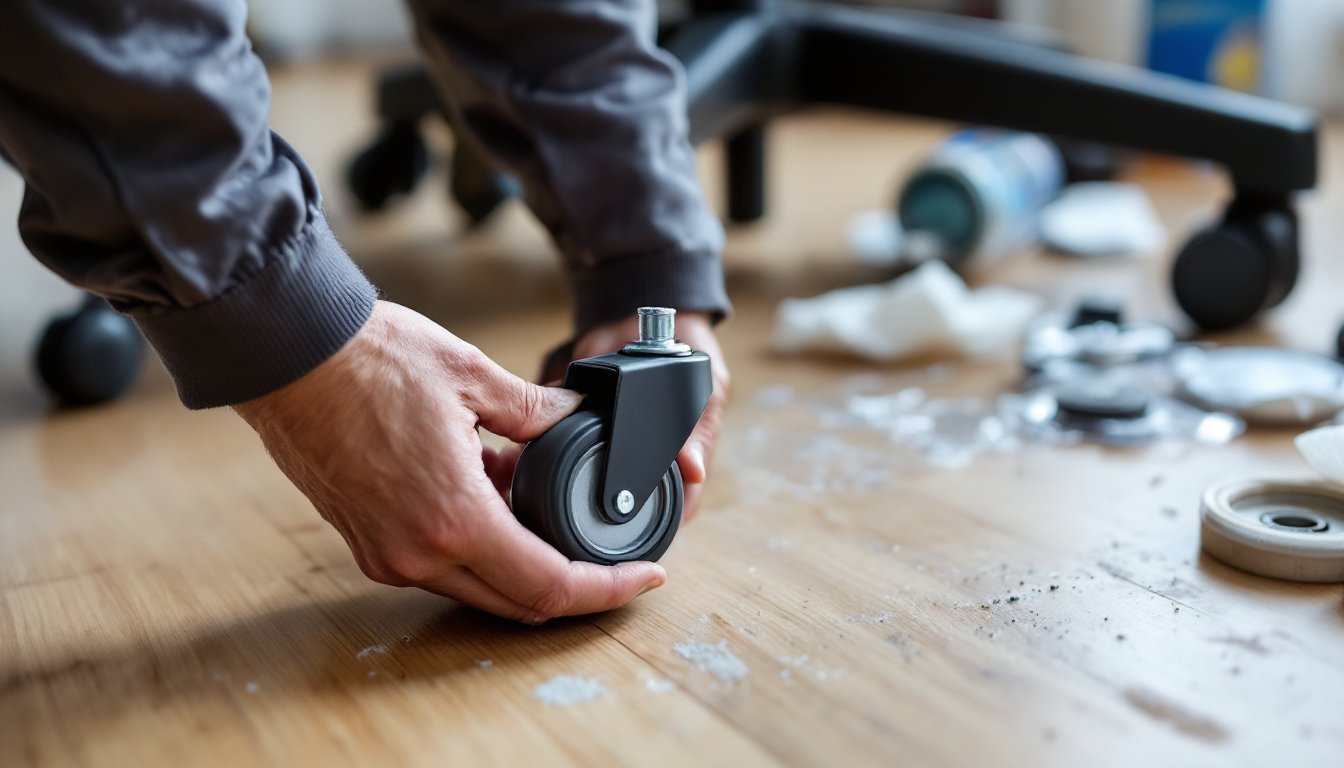
Rolling across the floor to grab a file shouldn’t sound like dragging a shopping cart through gravel. Yet that’s exactly what happens when office chair wheels wear out, and most people don’t realize how simple the fix is. Replacing worn casters takes about ten minutes, requires zero tools in most cases, and costs less than ordering takeout. Whether the wheels are leaving black streaks on hardwood, refusing to roll smoothly, or falling apart entirely, swapping them out is one of the easiest upgrades anyone can tackle. This guide walks through identifying problems, choosing compatible replacements, and installing new wheels step by step.
Table of Contents
ToggleKey Takeaways
- Office chair wheels replacement takes about 10 minutes and requires no special tools, making it one of the easiest DIY fixes for worn or damaged casters.
- Warning signs that office chair wheels need replacement include increased rolling resistance, black marks on flooring, visible damage, wobbling, and grinding or squeaking noises.
- Choosing the right wheel material is essential: hard plastic for thick carpet, soft polyurethane for hardwood and tile floors, and rollerblade-style wheels for mixed flooring environments.
- Grip ring stems and threaded stems are the two most common attachment types—measure the stem diameter and confirm the type before ordering replacement wheels to ensure compatibility.
- Regular maintenance like cleaning wheels every 3-6 months, lubricating bearings annually, and rotating wheel positions can double or triple the lifespan of your office chair wheels.
- Quality replacement wheel options range from basic hard plastic sets ($12-18) to premium rollerblade-style wheels ($40-60), with mid-grade polyurethane wheels offering good balance between cost and durability.
Signs Your Office Chair Wheels Need Replacement
Most office chair wheels fail gradually, not catastrophically. The first warning sign is usually increased rolling resistance, the chair that once glided effortlessly now requires a shove to move a few inches. This happens when dirt, hair, and debris wrap around the axle or when the wheel material hardens and loses flexibility.
Black marks on flooring are another dead giveaway, especially on hardwood, laminate, or vinyl. Degraded polyurethane or cheap plastic wheels leave scuff marks that regular mopping won’t remove. If wiping the wheels with a damp cloth doesn’t stop the marking, the material has broken down and needs replacement.
Visible damage is obvious: cracks in the wheel housing, flat spots from uneven wear, or wheels that wobble when the chair rolls. Any wheel that doesn’t spin freely when lifted off the floor is past its useful life. And if the stem (the post that inserts into the chair base) is bent or loose, the entire caster assembly needs replacement, no amount of tightening will fix a damaged stem.
Noise is the final tell. Grinding, squeaking, or clicking sounds mean either the bearing has failed or debris is jammed in the mechanism. While some squeaks respond to lubricant, persistent noise usually indicates worn bearings that won’t improve with cleaning.
Understanding Office Chair Wheel Types and Compatibility
Office chair wheels aren’t universal, but they fall into predictable categories. The two main variables are wheel material and stem type. Getting both right ensures the replacement wheels fit the chair base and work on the existing flooring.
Wheel materials break down into three common types. Hard plastic wheels (usually nylon or polypropylene) are standard on budget chairs and work well on carpet but destroy hard floors. Soft polyurethane wheels are gentler on hardwood, laminate, and tile but can pick up debris more easily. Rollerblade-style wheels use a rubber or PU tread on a harder core, these offer the best combination of floor protection and smooth rolling, though they cost more.
Diameter matters for rolling effort. Standard office chair wheels range from 2 inches to 3 inches in diameter. Larger wheels roll over obstacles (cables, floor transitions, thick carpet) more easily but may not fit chairs with tight clearances between the base and seat. Most replacement wheels are 2.5 inches, which works for the majority of chairs.
Stem Sizes and Attachment Methods
The stem is the post that inserts into the chair base, and getting the wrong size means the wheel won’t stay in place. The two most common types are grip ring stems and threaded stems.
Grip ring stems (also called friction ring or grip neck) are the standard on most modern office chairs. They feature a thin post, typically 7/16 inch (11 mm) in diameter, with a groove near the top that holds a split ring. This ring expands inside the socket to lock the wheel in place. To confirm compatibility, measure the stem diameter with calipers or compare it to a ruler. The stem length is usually 7/8 inch to 1 inch, though this varies.
Threaded stems screw directly into the chair base and are common on older or higher-end chairs. These use standard 5/16 inch × 18 TPI or 3/8 inch × 16 TPI threads. If the existing wheel unscrews rather than pulls out, it’s a threaded stem. Bring the old wheel to a hardware store to match the thread pitch if unsure.
Some chairs use a socket adapter instead of a direct stem mount. These adapters fit into the chair base first, then the wheel stem inserts into the adapter. Replacement wheels need to match the adapter’s socket size, not the chair base itself. When in doubt, many DIY repair tutorials recommend checking the chair manufacturer’s documentation or measuring the existing stem before ordering.
How to Remove Old Office Chair Wheels
Removing office chair wheels rarely requires tools, but the method depends on the stem type. For grip ring stem wheels, the process is straightforward:
- Tip the chair on its side or flip it upside down on a soft surface (carpet or old blanket) to avoid scratching the seat or armrests.
- Grip the wheel housing firmly with both hands, not the wheel itself, but the hard plastic or metal housing where the stem meets the base.
- Pull straight out with steady pressure. The grip ring should release from the socket after a firm tug. If it doesn’t budge, try rocking the wheel side to side while pulling. Avoid twisting, which can bend the stem.
- If the wheel still won’t release, spray a small amount of penetrating lubricant (like WD-40) into the socket where the stem inserts. Wait a few minutes, then try again.
For threaded stem wheels, the removal is even simpler:
- Grip the wheel housing and rotate counterclockwise (lefty-loosy). The wheel should unscrew from the base.
- If the wheel spins without unscrewing, hold the base steady with one hand while turning the wheel with the other. Some threaded wheels have a locking nut that needs to be loosened first.
Safety note: Wear work gloves if the wheels are grimy or have sharp edges from cracks. And keep a trash bag handy, old wheels often release a surprising amount of hair, dust, and mystery debris when removed.
For stubborn wheels that absolutely won’t budge, a flathead screwdriver can be carefully inserted between the base and the wheel housing to provide leverage. Pry gently and evenly around the perimeter to avoid cracking the base. If brute force isn’t working, the stem may be corroded or the wrong type, double-check whether it’s threaded before continuing.
Step-by-Step Installation Guide for New Wheels
Installing new office chair wheels is faster than removing the old ones, but precision matters. Misaligned stems can damage the socket or create a wobbly wheel.
For grip ring stem wheels:
- Inspect the socket in the chair base before inserting the new wheel. Remove any debris, old grip ring fragments, or corrosion with a dry cloth or compressed air. A clean socket ensures the grip ring seats properly.
- Align the stem with the socket opening. The stem should be perpendicular to the base, not at an angle.
- Push the wheel straight in with firm, even pressure. The grip ring will compress as it enters the socket, then expand to lock in place. You’ll feel (and hear) a distinct click when it seats fully.
- Test the wheel immediately by tugging on it. A properly installed wheel should not pull out without significant force. If it feels loose, remove it and inspect the grip ring, it may be damaged or missing.
- Repeat for all five wheels. Always replace all wheels at once, even if only one or two are damaged. Mismatched wheels cause uneven rolling and premature wear.
For threaded stem wheels:
- Thread the stem into the socket by hand, turning clockwise. The first few rotations should be smooth and require minimal force. If it binds immediately, stop, the threads may be cross-threaded.
- Tighten firmly by hand until snug. Most threaded wheels don’t require tools, but if the chair manufacturer specifies a torque setting, use an adjustable wrench to achieve it. Over-tightening can strip threads or crack the base.
- Check that the wheel rotates freely and doesn’t wobble side to side. A slight amount of play is normal, but excessive wobble indicates a damaged socket or mismatched stem.
Final check: Once all wheels are installed, set the chair upright and roll it in multiple directions. The movement should be smooth and silent. If one wheel drags or makes noise, remove and reinstall it. Many step-by-step DIY project tutorials suggest testing on the actual work surface (carpet, hardwood, etc.) to ensure the wheels perform as expected under real conditions.
Choosing the Right Replacement Wheels for Your Flooring
Flooring type dictates wheel material more than any other factor. Using hard wheels on hardwood or soft wheels on deep carpet creates frustration and premature wear.
For hardwood, laminate, and tile floors, soft polyurethane or rubber wheels are non-negotiable. Hard plastic wheels will scratch, dent, and mark these surfaces within days. Look for wheels specifically labeled as “hardwood floor safe” or “non-marking.” Durometer (hardness) ratings around 60A to 80A provide enough grip to roll smoothly without damaging the floor. Rollerblade-style wheels are ideal here, they distribute weight over a wider contact patch and glide with less effort.
For low-pile carpet or commercial carpet tiles, either hard plastic or soft wheels work. Hard wheels require less rolling force on dense carpet, which reduces fatigue during long work sessions. But if the carpet sits over hardwood or the chair occasionally rolls onto hard flooring, soft wheels are the safer choice.
For plush or high-pile carpet, hard nylon or polypropylene wheels are the only practical option. Soft wheels sink into deep carpet and create excessive rolling resistance. Some manufacturers offer larger-diameter wheels (3 inches) specifically for thick carpet, these roll over the pile rather than compressing it.
For mixed flooring environments (carpet to hardwood transitions), rollerblade-style wheels with a harder core and softer tread offer the best compromise. They roll easily on carpet but won’t damage hard floors. Expect to pay $30 to $50 for a quality set versus $15 to $25 for basic replacements.
Weight capacity is another consideration. Standard office chair wheels are rated for 200 to 250 pounds (total chair and occupant weight). Heavy-duty wheels rated for 300+ pounds use reinforced housings and larger bearings. Check the product specifications if the chair will support more than average weight, undersized wheels fail quickly under overload.
One often-overlooked detail: wheel tread width. Narrow wheels (less than 1 inch wide) concentrate weight and can leave indentations in soft flooring. Wider wheels (1.5 to 2 inches) spread the load and reduce floor damage. For anyone concerned about protecting premium flooring, wider rollerblade-style wheels are worth the extra cost.
Maintenance Tips to Extend Wheel Lifespan
New wheels won’t stay smooth forever without basic maintenance. A few simple habits can double or triple their useful life.
Clean the wheels every three to six months, depending on the environment. Hair, dust, and carpet fibers wrap around the axle and create drag. Flip the chair over and use scissors to cut away any hair or string wound around the wheel shaft. For stubborn grime, remove the wheels entirely and wipe down the stem and socket with a damp cloth. Compressed air works well for blowing debris out of tight spaces.
Lubricate the wheel bearings annually if they develop squeaks or resistance. Remove the wheels and apply a drop of silicone-based lubricant or PTFE (Teflon) lubricant to the bearing. Avoid oil-based lubricants, which attract dust and gum up over time. Spin the wheel a few times to distribute the lubricant, then wipe away any excess.
Inspect for damage during cleaning. Look for cracks in the wheel housing, flat spots on the tread, or loose stems. Catching problems early prevents the wheel from failing completely and potentially damaging the chair base or flooring. A single damaged wheel should be replaced immediately, limping along on four good wheels and one bad one accelerates wear on the others.
Rotate the wheels if uneven wear develops. Some positions (typically the front wheels) wear faster due to weight distribution and rolling patterns. Swapping wheel positions every six months evens out the wear and extends the life of the entire set. This matters most for rollerblade-style wheels, which show tread wear more obviously than solid plastic wheels.
Use a chair mat on hard floors if the workspace allows it. Even the best hardwood-safe wheels create friction and micro-abrasions over time. A polycarbonate or vinyl chair mat protects the floor and reduces rolling resistance, which means less stress on the wheel bearings. For those investing in quality comfortable office chairs, a chair mat is cheap insurance against floor damage.
Avoid rolling over obstacles like power cables, area rug edges, or debris. Running over these repeatedly puts stress on the wheel housing and can crack the plastic or damage the bearings. Route cables under the desk or use cable management clips to keep the floor clear. And if the chair will sit on a rug, make sure the rug is flat, wrinkled edges are murder on caster wheels.
Cost estimates for replacement wheels vary widely based on quality and material. Basic hard plastic wheels start around $12 to $18 for a set of five. Mid-grade polyurethane wheels run $20 to $35. Premium rollerblade-style wheels can reach $40 to $60, but they outlast cheaper options by years. Prices fluctuate with shipping costs and material availability, so shop around. Local office supply stores often stock basic replacements, while specialty wheels usually require online ordering. For detailed project planning and cost breakdowns, resources like HomeAdvisor provide region-specific estimates and contractor matching if professional installation is ever needed, though for wheels, that’s overkill.