Installing wallpaper in a home office isn’t just about aesthetics, it’s about creating a workspace that actually works. Unlike paint, wallpaper brings texture, pattern, and dimension to walls, which can influence mood, focus, and even productivity. Whether working with a dedicated room or carving out space in a corner, the right wallpaper choice sets the tone for how that space functions. With advances in peel-and-stick technology and a surge in sophisticated pattern options, wallpaper has become a DIY-friendly project that delivers professional-level results. Here’s how to pick, plan, and install wallpaper that makes a home office feel intentional.
Table of Contents
ToggleKey Takeaways
- Home office wallpaper ideas go beyond aesthetics—textured and patterned designs improve mood, focus, and productivity while hiding wall imperfections better than paint.
- Geometric patterns and botanical prints create the right balance of visual interest; geometric designs bring order and focus while large-scale botanicals work best as feature walls behind desks.
- Choose bold colors for energizing concentration in well-lit spaces or neutral textures for calming backdrops during long work sessions, then pair your selection with proper lighting to reduce eye strain.
- An accent wall behind your desk maximizes impact while controlling costs and preventing pattern overload, making it the ideal strategy for most home offices.
- Modern wallpaper materials like peel-and-stick options and non-woven varieties offer durability and DIY-friendly installation without the permanence of traditional vinyl, so test samples in your space before committing.
Why Wallpaper Is the Perfect Choice for Your Home Office
Wallpaper offers something paint can’t: layered visual interest without additional decor. In a home office, where wall space often competes with monitors, shelves, and task lighting, wallpaper fills the background with purpose. It defines the room without cluttering it.
From a practical standpoint, modern wallpaper materials have evolved. Peel-and-stick wallpaper uses a repositionable adhesive that won’t damage drywall, making it renter-friendly and ideal for DIYers who want to avoid paste mixing and booking time. Traditional paste-the-wall or pre-pasted options still offer superior durability for permanent installations, especially in high-traffic areas.
Wallpaper also hides imperfections better than flat paint. Textured or patterned designs camouflage minor drywall dings, seams, or uneven surfaces that would telegraph through a single coat of satin or eggshell. For older homes with plaster walls, a heavy-duty wallpaper can even add a subtle reinforcement layer.
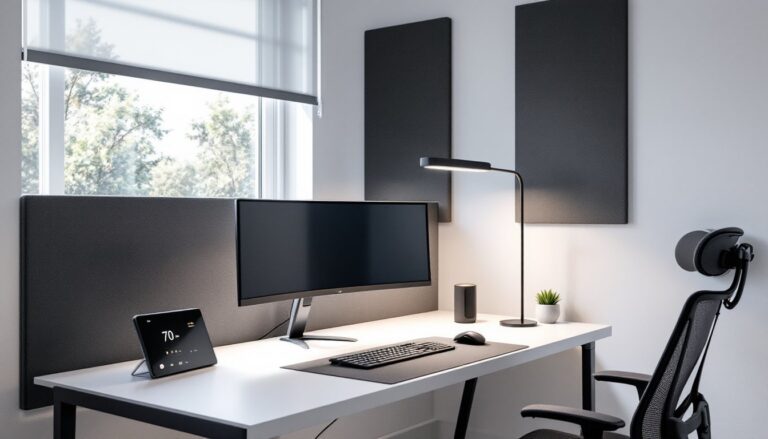
One often-overlooked benefit: wallpaper can improve acoustics. Textured materials like grasscloth or embossed vinyl dampen sound reflection, which matters during video calls or when trying to concentrate. It’s not soundproofing, but it reduces the echo that makes small rooms feel harsh.
Sophisticated Patterns That Boost Productivity
Pattern choice directly affects how a space feels during long work sessions. Busy, high-contrast designs can overstimulate, while overly plain walls fade into boring. The sweet spot: patterns that add structure without distraction.
Geometric Designs for Modern Focus
Geometric wallpaper, think hexagons, chevrons, or grid patterns, brings order to a workspace. The repetition creates a visual rhythm that can subtly reinforce focus, especially when executed in a limited color palette. Linear patterns (vertical stripes, stacked rectangles) can make a room with an 8-foot ceiling feel taller, which helps in smaller home offices where spatial proportions matter.
Avoid overly complex geometrics with multiple colors or intersecting angles. A simple two-tone hexagon pattern in charcoal and cream works better than a kaleidoscope of shapes. Designs inspired by mid-century modern architecture or Scandinavian minimalism tend to age well and pair easily with a range of furniture styles.
For those tackling a complete office renovation, geometric wallpaper can anchor the room’s aesthetic and inform choices for flooring, lighting, and built-ins.
Botanical and Nature-Inspired Prints
Botanical wallpapers, ferns, palms, line-drawn florals, tap into biophilic design principles, which suggest that natural imagery can reduce stress and improve cognitive function. Research highlighted by sources like House Beautiful backs up the idea that nature-inspired interiors contribute to well-being.
Choose stylized botanical prints rather than photorealistic murals. Line drawings of monstera leaves or abstract branch patterns feel modern without looking dated. Watercolor botanicals work in creative fields but can feel too soft for finance or tech-focused work: match the pattern to the work being done.
Scale matters. Large-scale botanicals (leaves spanning 12–18 inches) suit feature walls but can overwhelm if applied to all four walls. Medium-scale prints (4–8 inch repeats) offer versatility. When planning an office room makeover, a botanical accent wall behind a desk can create a focal point without competing with shelving or monitors on adjacent walls.
Bold Colors vs. Calming Neutrals: Choosing Your Palette
Color psychology isn’t pseudoscience, but it’s also not one-size-fits-all. The right palette depends on the type of work, natural light availability, and personal tolerance for stimulation.
Bold colors, deep navy, forest green, terracotta, can energize a space and create a cocooning effect that aids concentration. Dark wallpapers work best in rooms with ample natural light or strong task lighting: otherwise, they absorb light and make the space feel cramped. Pairing bold wallpaper with white or light wood furniture balances the visual weight.
One caution: bold, saturated colors can cause eye fatigue during long screen sessions. If going dark, ensure monitor brightness is calibrated and consider adding a bias light behind the screen to reduce contrast strain.
Calming neutrals, grays, taupes, soft whites with subtle texture, create a quieter backdrop that won’t compete with video call backgrounds or distract during deep work. Neutral doesn’t mean boring: textured neutrals like linen-look wallpaper or tone-on-tone damask add depth without color.
For remote workers who spend 8+ hours in the space, neutrals paired with colorful accents (artwork, plants, desk accessories) offer flexibility. The wallpaper becomes a canvas rather than the statement. Anyone exploring office color schemes should weigh how wall color interacts with existing furniture and lighting before committing to a bold direction.
Accent Wall Strategies for Maximum Impact
Accent walls solve two problems: they reduce material cost and prevent pattern overload. In a home office, the wall behind the desk is the natural choice, it’s visible during video calls and creates a focal point when entering the room.
Measure carefully. Wallpaper is sold by the roll, typically covering 56 square feet (for a standard 20.5-inch by 33-foot roll), though this varies by manufacturer. Account for pattern repeat, large repeats waste more material at seams. A wall that’s 10 feet wide by 8 feet tall (80 square feet) might need two rolls if the pattern repeat is 24 inches or more.
Prepare the wall properly. Fill any holes with lightweight spackle, sand smooth with 120-grit paper, and wipe down with a damp cloth to remove dust. If the wall has been painted with glossy paint, lightly scuff it with 220-grit sandpaper to help adhesive bond. For peel-and-stick wallpaper, a slightly textured surface actually improves adhesion.
Installation basics:
- Use a level and pencil to mark a plumb vertical line as your starting guide. Don’t trust the corner, it’s rarely perfectly square.
- Cut the first strip about 2 inches longer than the wall height for trimming.
- For peel-and-stick, peel back about 12 inches of backing at a time, aligning the edge to your plumb line, then smooth with a plastic smoother or credit card to eliminate bubbles.
- For traditional wallpaper, apply paste per manufacturer instructions (some are paste-the-wall, others require pasting the paper and booking it for 5–10 minutes).
- Trim top and bottom with a sharp utility knife against a putty knife or straightedge. Change blades frequently, dull blades tear paper.
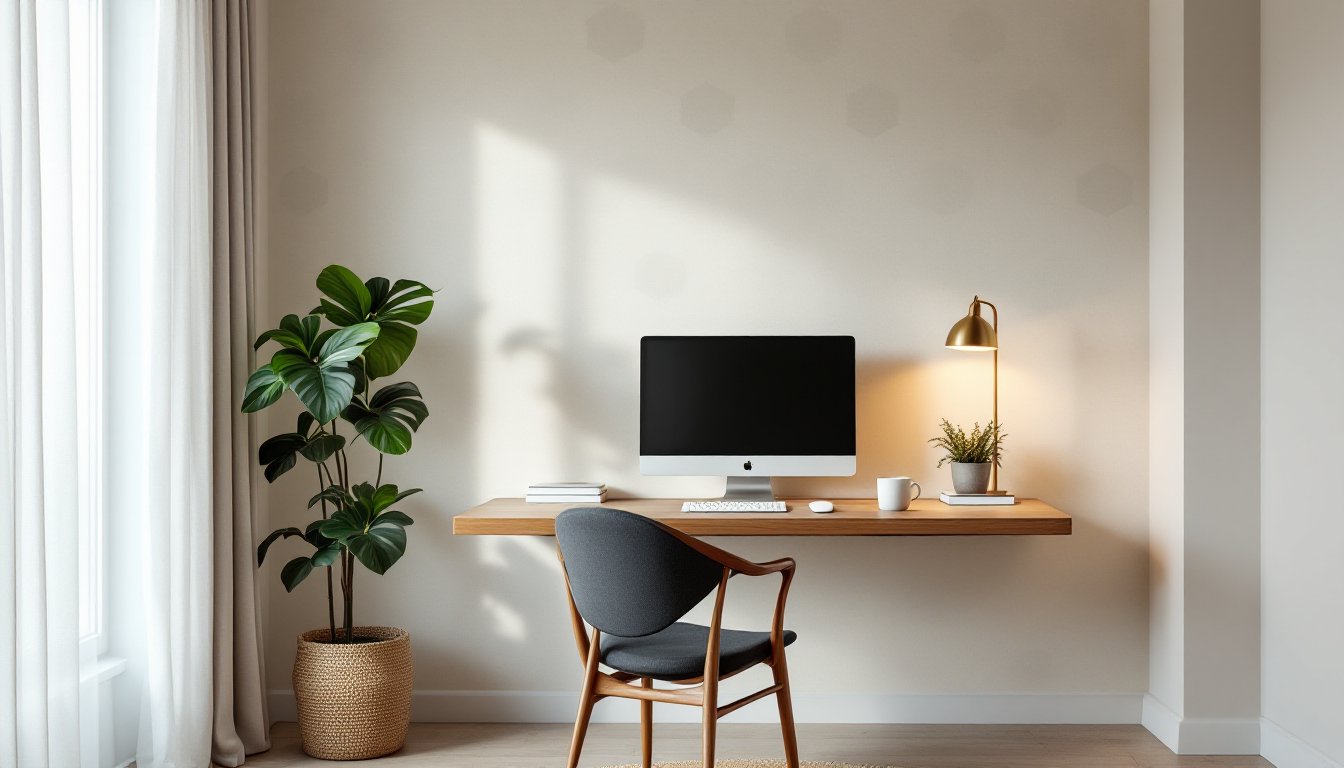
If working in a small home office, an accent wall behind a floating desk can create depth without making the room feel closed in.
Texture and Material Considerations
Wallpaper material affects both durability and installation difficulty. Here’s a breakdown of common types:
Vinyl wallpaper is the most durable and moisture-resistant. It’s wipeable, which matters if the office doubles as a crafting space or kid’s assignments zone. Solid vinyl handles scrubbing: vinyl-coated paper is less robust but still more durable than plain paper. According to Decoist, vinyl options dominate the market for high-traffic areas.
Non-woven wallpaper is breathable, won’t expand or contract with humidity, and is easier to remove than vinyl, just peel it off in full strips. It’s a good middle ground for DIYers who want durability without the permanence of vinyl.
Grasscloth and natural fiber wallpapers (jute, sisal, cork veneer) add organic texture but are harder to clean and show seams more visibly. Each panel is unique, so color variation is expected. Installation requires precision, paste squeeze-out can stain the surface and is nearly impossible to remove. These materials suit low-traffic offices where aesthetics trump practicality.
Peel-and-stick (removable wallpaper) uses a pressure-sensitive adhesive. Quality varies widely: cheaper versions may not stick to textured walls or may leave residue. Look for products labeled “repositionable” rather than just “removable.” These work on smooth, painted drywall but may fail on textured or freshly painted surfaces (wait 30 days after painting before applying).
Embossed or textured wallpapers hide imperfections and add tactile interest. Paintable textured wallpaper (anaglypta or blown vinyl) can be installed and then painted to match any color scheme, offering flexibility for those who want texture without committing to a pattern.
Before purchasing, order samples. Hold them against the wall in both natural and artificial light, at different times of day. What looks sophisticated in a catalog might read as busy in a 10×12 room. Test peel-and-stick samples for adhesion: if they won’t stay put in the sample, they won’t perform at scale.
Safety note: Wear safety glasses and gloves when cutting wallpaper with a utility knife, and ensure adequate ventilation if using solvent-based adhesives. Some wallpapers (especially older ones or imports) may contain VOCs: look for low-VOC or Greenguard-certified products if indoor air quality is a concern.
Anyone undertaking a full home office setup should coordinate wallpaper selection with lighting, furniture, and tech placement. A textured neutral wallpaper, for instance, pairs well with adjustable LED task lighting and minimizes glare on screens, critical for eye comfort during long work sessions.